
Japanese hair straightening.
Smoother mornings. Beautifully straight hair.
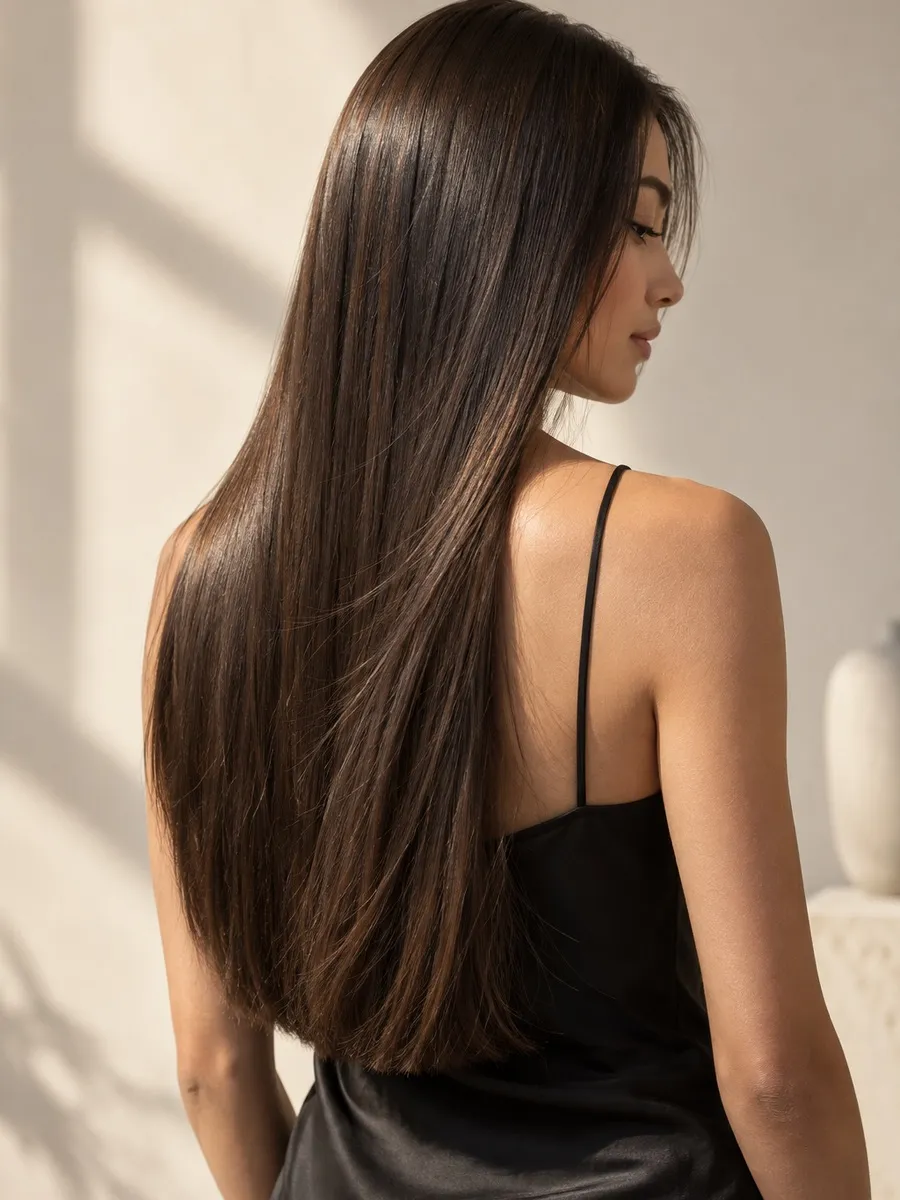
Also known as thermal reconditioning, this professional treatment reshapes the hair’s internal bonds to create a straighter finish. Treated lengths stay straight as your natural texture grows in at the roots.
by our salon
Japanese straightening experience
Japanese straightening experience
Experience that makes a difference
From your first consultation to your next base color, we tailor the service to your hair’s history, condition, and the result you have in mind.
Start with a conversation
A complimentary consultation is the best place to begin. We’ll assess your hair, talk through the possibilities, and provide a personal quote before you commit.
See the transformation.
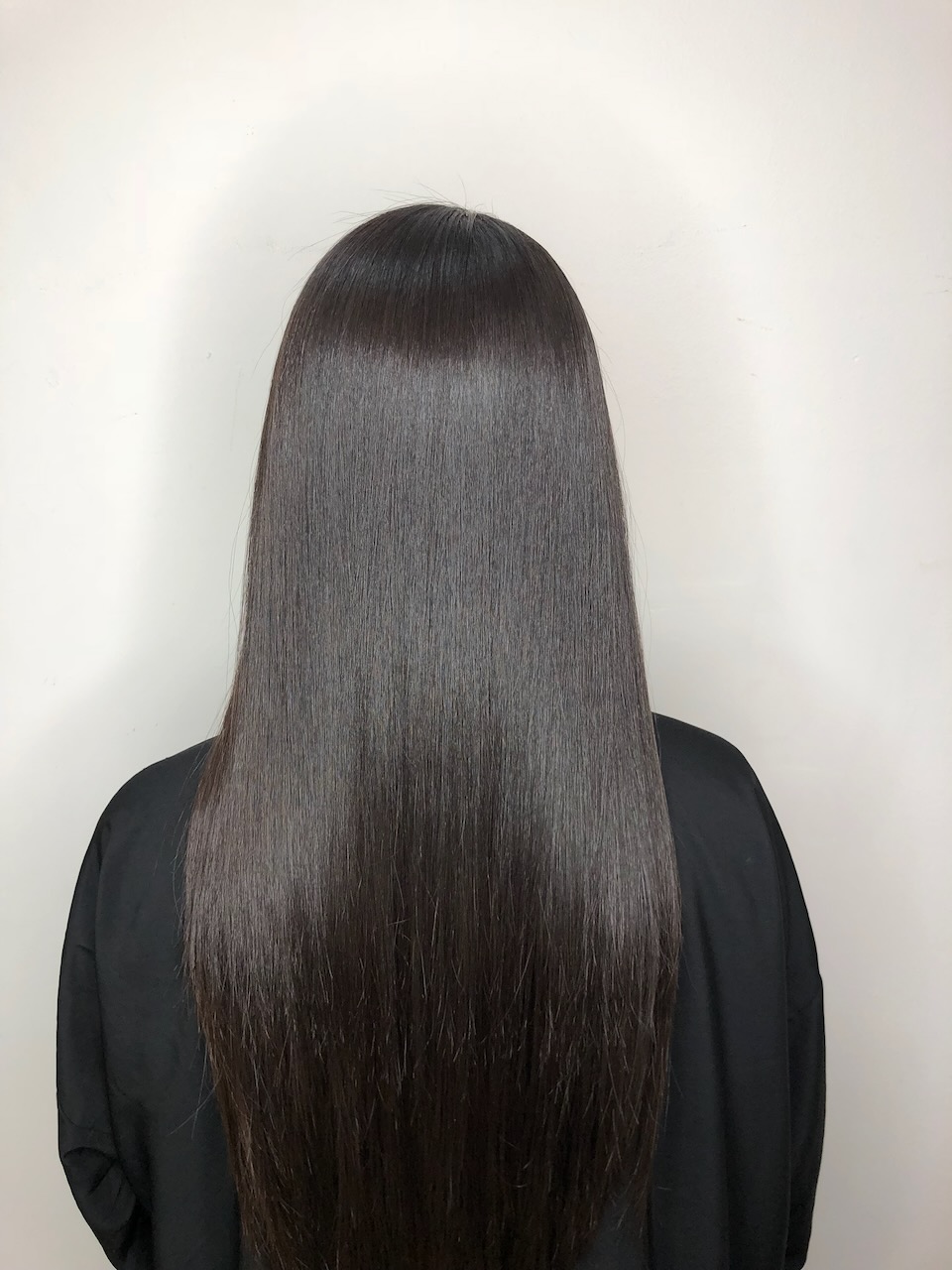
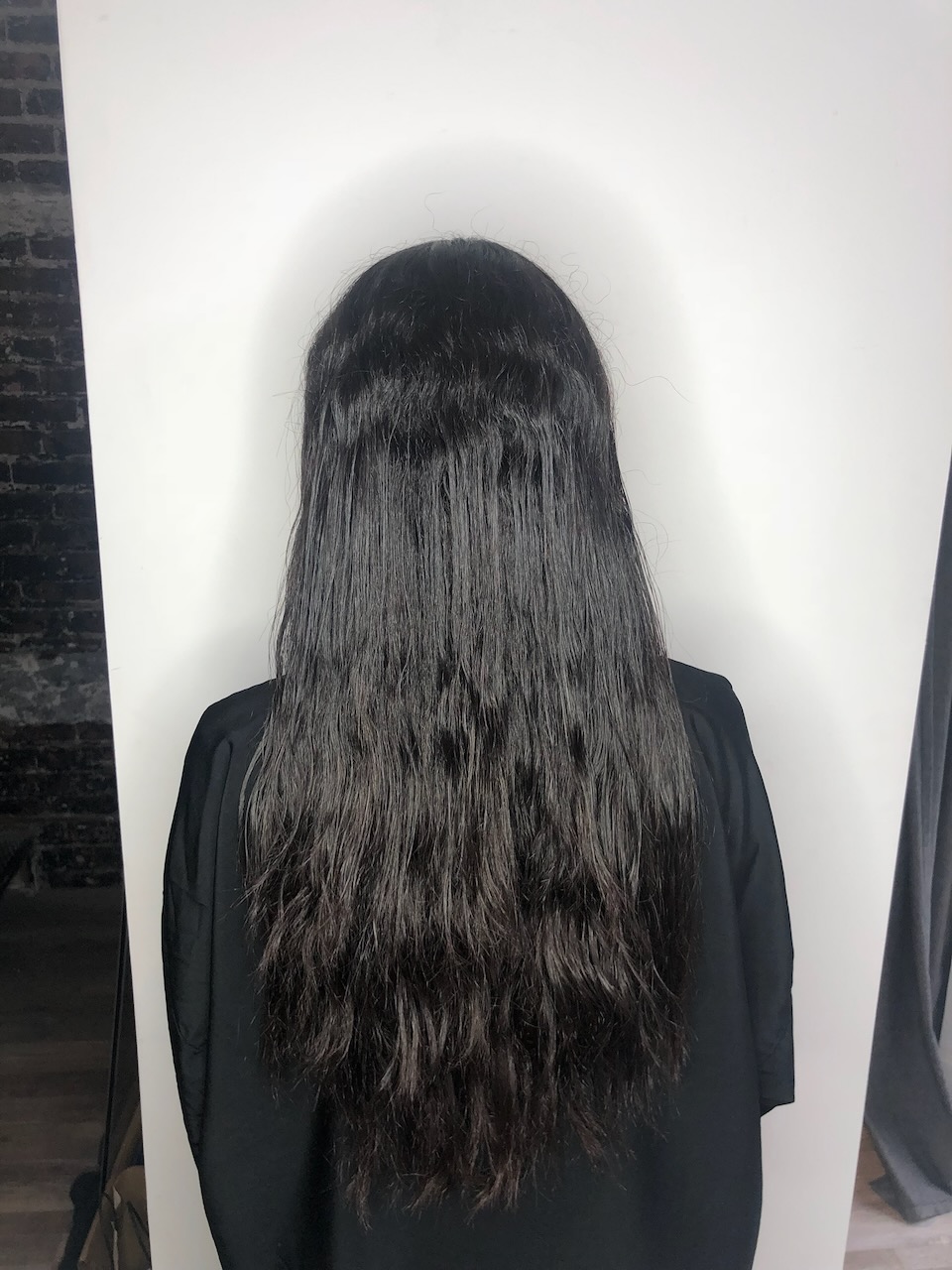
Explore before-and-after results from Patrick Evan Salon. Drag across the photo to compare, or choose a result below.
The systems we use
Every head of hair responds differently to straightening. Rather than relying on a single product line, we work with three trusted Japanese systems, each with its own strengths and formula options. That wider range lets us tailor every treatment to your texture, condition and chemical history, so you get the best possible result for your hair.
YUKO Japanese Hair Straightening
YUKO is one of the original Japanese thermal reconditioning systems, known for creating exceptionally smooth, straight, glossy hair while allowing the formula to be selected according to the hair’s condition and chemical history. Patrick received advanced YUKO training at the YUKO flagship in Tokyo as well as in Beverly Hills, and both Patrick and Clara have extensive hands-on experience working with the YUKO system.
Liscio by Milbon
Liscio is a professional Japanese straightening system from Milbon with multiple formula strengths designed for different hair textures, resistance levels, and degrees of chemical processing. Patrick is trained and certified in the Liscio system and has worked with the line for years, allowing him to customize the process rather than relying on a one-formula-fits-all approach.
iStraight
iStraight is a versatile Japanese hair straightening system offering Max, Normal, and Mild formulas for everything from strong, resistant virgin hair to color-treated, highlighted, and more sensitized hair. Patrick and Clara have years of experience using iStraight and selecting the appropriate strength based on each client’s texture, previous chemical services, and overall hair condition.
Frequently asked questions
Beautifully smooth, straight hair that stays that way. Everything we treat remains permanently straight; only new growth will need attention at future visits. For most clients, the daily routine goes from hours of blow-drying and styling to just a handful of minutes, and for many, simple wash-and-wear becomes the norm.
A gentle, thio-based solution penetrates beneath the cuticle and relaxes the bonds that give each strand its natural curl. After rinsing and drying, your hair is flat-ironed section by section, then a neutralizer re-forms those bonds to set your hair in its new, silky-straight shape.
Your appointment follows four steps. First, we assess your hair, agree on your goal and prepare it for the chosen system. Next, the straightening solution is selected for your hair and monitored throughout processing. After rinsing and drying, your stylist flat-irons your hair carefully in small sections. Finally, a neutralizing step sets the new shape, followed by rinsing, finishing and your home-care guidance.
Japanese straightening permanently changes the treated hair’s curl pattern. Keratin smoothing is generally temporary and focuses on manageability and reducing frizz. If you want to keep more of your natural movement, we can talk through smoothing alternatives at your consultation.
Learn about keratin treatments →The treated lengths remain straight; new hair grows in with your natural texture. Root touch-ups are often planned around four to eight months, depending on your growth and how much contrast you notice. Your stylist will help you choose the right timing.
It depends on your curl pattern. Very tight curls usually need a retouch about every 4 months, looser curls about every 6 months, and wavy hair about every 7 to 9 months. Between visits, a quick pass with a flat iron blends your roots with the straightened lengths. Retouches are still a detailed, involved process that calls for real expertise. Our specialists apply each retouch only to new growth, carefully blending it with your previously treated hair for a seamless result.
Color, highlights, henna, metallic dyes, some medications and hormonal changes can weaken hair or react with the solution. When your hair’s history is incomplete or there are unknown factors, we may recommend a strand test to see exactly how your hair will respond before we begin.
Not always. When your hair’s history is unclear, a strand test helps us see how it will respond before we begin. Occasionally, color history, complex highlights or past treatments mean straightening isn’t the right choice for your hair right now. We only take on work we’re confident will give you beautiful results, because we care about your hair for the long term.
Yes, with planning. Generally, we can’t color hair within 14 days on either side of the treatment, so we recommend coloring two weeks to one month before your appointment. Please have your color touched up to the root beforehand for an even result. Salon color is best and semi-permanent is gentlest. Drugstore dyes aren’t ideal and can complicate the process, though most of the time we’re still able to successfully treat hair that has been colored at home. Contact us before any color service.
Sometimes, but it needs special care. Highlights can strip up to half of the hair’s protein and create uneven porosity, especially on long hair that has been lightened several times. For many highlighted clients, keratin smoothing is the better choice because it adds protein rather than removing it. We’ll recommend the right option at your consultation.
Keep your hair completely dry for 48 to 72 hours. If it gets wet, blow-dry it straight away. Avoid anything that could leave a crease, such as tight hats, headbands, clips, scarves, ties or tucking your hair behind your ears. If a crease appears, gently iron it out, keeping the iron moving.
Once the first 72 hours have passed, you can wash and style as usual. The right shampoo and conditioner make a real difference: we recommend a moisturizing shampoo paired with a conditioner that detangles easily, so combing is gentle and your hair stays smooth and strong. If you heat style often, a heat-protection serum is a great addition, and some clients love a finishing serum on dry hair for extra shine and softness. Your stylist will suggest products and a simple routine suited to your hair.
Yes, and many clients do. You can add waves or curls with a curling iron or hot rollers, and they’ll last until your next wash. The beauty of Japanese hair straightening is that your hair then resets to smooth and straight, so you start each style from a clean, easy base instead of first fighting your natural texture. For naturally curly hair, that can save a tremendous amount of styling time.
Yes. Recent health concerns relate to traditional lye-based relaxers applied directly to the scalp. Thermal reconditioning uses a thioglycolate-based solution, the same type of active ingredient found in classic perm solutions, which has been used in salons since the 1950s. Unlike a perm, our solution is never applied to the scalp: we keep it a quarter to half an inch away, so it doesn’t come into contact with your skin. For an independent reference, the Environmental Working Group (EWG), a nonprofit research organization, publishes ingredient safety information in its Skin Deep® cosmetics database, one of the most widely used resources of its kind.
View ammonium thioglycolate on EWG Skin Deep ↗No. The Japanese straightening systems we use do not contain formaldehyde or methylene glycol, the formaldehyde-releasing ingredient found in some keratin and smoothing treatments. Instead, they use a thio-based solution to reshape the hair, so there are no formaldehyde fumes during your appointment.